The Order (2024)
In director Justin Kurzel’s gripping investigative thriller “The Order,” Jude Law portrays a disheveled FBI Agent Terry Husk, who embodies a shadow of his former self. His once sturdy frame is now hunched, his five o'clock shadow has morphed into a full-blown scruff, and the gum he chews has turned to a fine powder. Arriving in the charming town of Coeur D’Alene, Idaho, to probe a mysterious disappearance, Husk fits the mold of a familiar character a solitary lawman estranged from his loved ones and burdened by regret leading us to anticipate his intense approach to the case. He’s ready to dismantle it with relentless determination.
As Husk prowls the town, he seeks connections between the disappearance and a series of bank heists along with explosive devices scattered throughout the area. Young officer Jamie Bowen (Tye Sheridan), eager and ambitious, directs Husk toward the Aryan Nation compound located just a few miles away.
While the film’s exploration of cults in a rural setting may draw comparisons to “True Detective,” such parallels feel overly simplistic. The female murderer from the first season of “True Detective” feels almost mythical in her elusiveness. In contrast, the gang depicted in Kurzel’s film is disturbingly tangible and alarmingly present. Much like today’s white supremacists, they are no longer satisfied with merely voicing their hateful ideologies from hidden enclaves. Young men like Bob Matthews (Nicholas Hoult) are eager to step out from the shadows of their predecessors, intent on establishing a new world order through force.
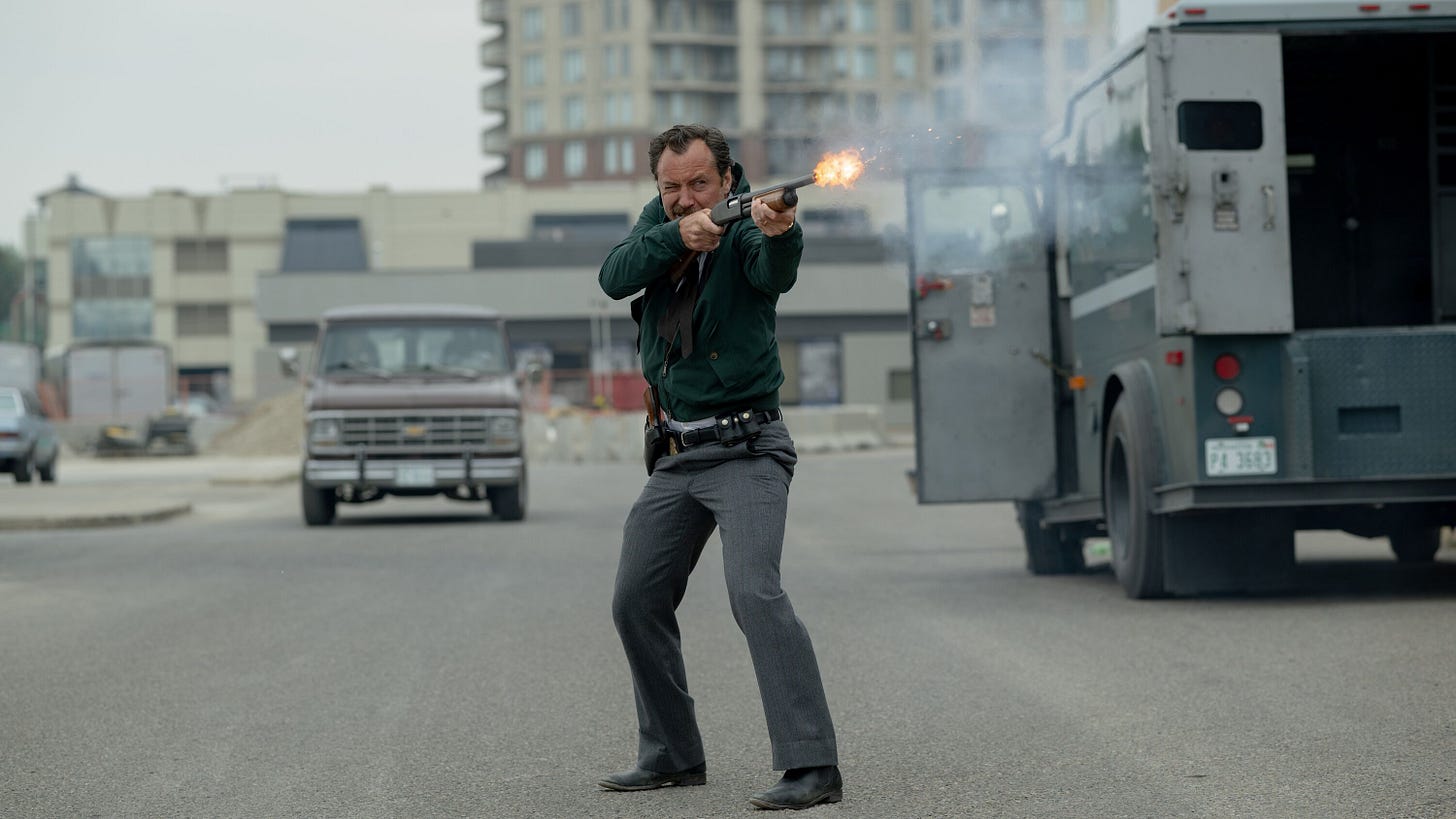 |
| The Order (2024) |
In DP Adam Arkapaw’s stunning photography of remote landscapes imbued with a haunting beauty, “The Order” often brings to mind Kurzel’s “The True History of the Kelly Gang.” That film intertwined the harsh Australian landscape with the fierce spirit of anti-colonial outlaws. In “The Order,” however, these outlaws, despite their convictions, lack the same level of principle. Their prejudice lingers on the fringes of the country, and this sense of alienation intensifies their urge to push eastward in a bid to topple the government.
The story kicks off in 1983 with the confrontational voice of Jewish Colorado radio host Alan Berg (Marc Maron), who engages in verbal battles with antisemitic callers. Soon, Kurzel and editor Nick Fenton transport viewers into a vehicle where two friends are escorting another associate to his execution in a secluded area of the woods. These two will later team up with Matthews and another individual for a bank heist. When Matthews returns home to his wife, his white shirt stained by a burst red dye pack, she isn’t shocked. Instead, she feels joy and relief upon seeing the duffle bag filled with cash.
Interestingly, Law’s Husk spends a significant portion of the nearly two-hour film off-screen. Instead, Kurzel focuses on Matthews, meticulously tracking the execution of his scheme. This presents a dramatic challenge. Matthews is simply a zealot, offering little psychological depth beyond what is immediately apparent. Hoult doesn’t exaggerate Matthews; he depicts him as a self-proclaimed messianic figure who remains grounded and relatable to his followers. His most compelling moments aren’t with the gang highlighting the lack of depth in that dynamic but rather in his interactions with Law.
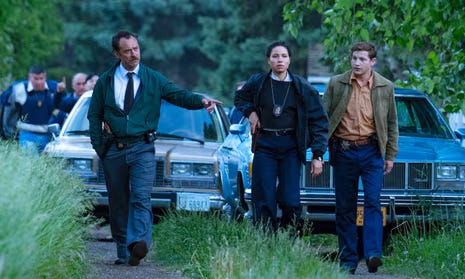 |
| The Order (2024) |
The reality presented here isn’t particularly shocking, as the film’s standout moments often revolve around Law. Jurnee Smollett delivers a powerful performance as fellow FBI agent Joanne Carney, alongside a dedicated Sheridan. While Law carries a somber presence, the other two actors bring their own unique qualities that highlight Husk’s emotional turmoil. However, a different energy emerges when Law and Hoult share the screen. Both portray men seemingly fated to solitude; their similarities allow them to anticipate each other’s actions. Their performances resonate in a way that reflects this connection, with even their awkward laughs showcasing their adaptability in social situations.
The film’s tactile elements further illustrate their cat-and-mouse dynamic. The wood-paneled interiors and gritty neon-lit bars evoke a sense of history, filled with the lingering scents of sweat and love, which not only set the time period but also reveal the characters’ inner struggles. Matthews aspires to be a family man yet is drawn back to the cold, metallic warehouse housing his weapons, while Husk spends his mornings trying to cleanse himself of regret in a nearby creek. These details keep the film grounded, even amidst the adrenaline-fueled heists carried out by Matthews and his team culminating in a tracking shot so masterfully composed that it brought me back to the intense focus I felt during the longer, intricate shot in “True Detective.”
In contrast to many true-crime films, “The Order” doesn’t seek to shock or exploit. Instead, it maintains a firm grip on tone, mood, and pacing, aiming not to manipulate the audience but to gradually expose them to the same emptiness felt by Husk. In doing so, it powerfully dismantles our emotional defenses.
For More Movies Like The Order (2024) Watch on Fmovies


Comments
Post a Comment